Why I Bought 100 Shares of Pepsi (NASDAQ: PEP) at $143.64 and Sold the $144 Covered Call for $2.20
Published: July 8, 2026
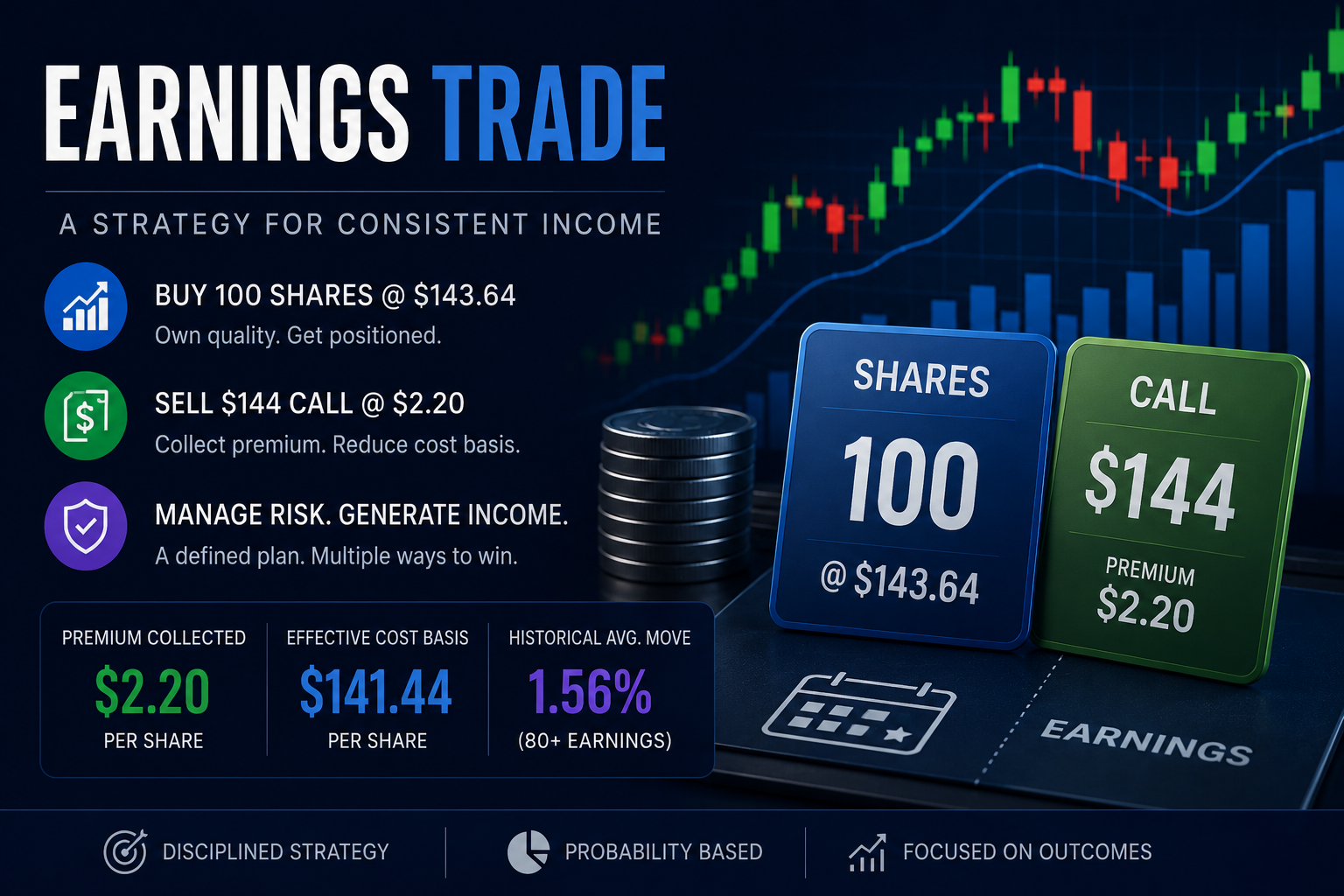
Today I opened a simple options income trade that I believe offers an attractive balance between downside protection and potential return.
The Trade
- Bought: 100 shares of PepsiCo (NASDAQ: PEP) at $143.64
- Sold: 1 covered call with a $144 strike
- Premium Collected: $2.20 per share ($220 total)
Since each options contract represents 100 shares, selling the covered call immediately generated $220 in premium.
That premium effectively reduces my net cost basis:
- Share Purchase Price: $143.64
- Option Premium Received: -$2.20
- Effective Cost Basis: $141.44
This gives me approximately 1.53% downside protection before I begin losing money on the position.
Why Pepsi?
Pepsi isn't the type of company that typically experiences massive post-earnings swings. It's a mature, dividend-paying consumer staples business with a diversified portfolio of global brands.
What caught my attention was its historical earnings behavior.
Looking back across more than 80 earnings reports, Pepsi has averaged an absolute move of roughly 1.56% following earnings. That relatively muted historical volatility makes it an interesting candidate for covered call strategies around earnings. Historical moves don't guarantee future results, but they can provide useful context when evaluating risk.
If you're interested in exploring the historical data yourself, I've published the full earnings movement analysis here:
https://wsfriend.com/earnings/price/movement/PEP/
Why Sell the $144 Call?
My goal isn't necessarily to maximize upside.
Instead, I'm looking to:
- Generate immediate income from option premium.
- Reduce my effective purchase price.
- Potentially exit the position at a small profit if assigned.
- Take advantage of elevated implied volatility heading into earnings.
With the $2.20 premium collected, my outcomes look like this:
Scenario 1: Stock closes above $144
If Pepsi finishes above the strike price at expiration, my shares will likely be called away.
My return would include:
- $0.36/share capital gain ($143.64 → $144.00)
- $2.20/share option premium
Total profit:
$2.56 per share or $256 on approximately $14,364 invested.
That's roughly a 1.78% return over the life of the trade, excluding any dividends that may apply.
Scenario 2: Stock stays below $144
If Pepsi remains below the strike:
- I keep the entire $220 premium.
- I continue owning the shares.
- My adjusted cost basis remains at $141.44.
- I can evaluate selling another covered call in the future.
Risk Still Exists
This isn't a risk-free strategy.
If Pepsi experiences an unusually large decline after earnings, the premium only offsets the first $2.20 of losses.
Covered calls reduce downside slightly—they don't eliminate it.
Likewise, if Pepsi rallies significantly beyond $144, my upside becomes capped because I have an obligation to sell my shares at the strike price.
For me, that's an acceptable trade-off in exchange for immediate income and a higher probability outcome.
Why This Trade Fits My Style
I generally prefer option strategies where:
- Historical volatility has been relatively contained.
- Premiums are attractive relative to expected movement.
- I'm comfortable owning the underlying business.
- The trade has multiple ways to succeed.
Pepsi checked those boxes.
The objective wasn't to predict earnings perfectly—it was to structure a trade where probability, premium collected, and historical price behavior aligned in a favorable way.
As always, this is simply my personal investment journal and not financial advice. Every investor should perform their own research and ensure any options strategy matches their own objectives and risk tolerance.
Comments (0)
Be the first to comment.